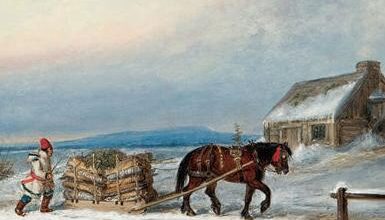
“Her shameless little gown exposed more than it should have. But few of Sophy’s customers were shocked. They were mainly chorus girls and ladies of doubtful complexion in search of cheap and ultra footgear, and–to use a health term–hardened by exposure.”
An illustration for the story What She Wore by the author Edna Ferber
Mary MacLaren, The Photo-Play Journal, 1920
Somewhere in your story you must pause to describe your heroine’s costume. It is a ticklish task. The average reader likes his heroine well dressed. He is not satisfied with knowing that she looked like a tall, fair lily. He wants to be told that her gown was of green crepe, with lace ruffles that swirled at her feet. Writers used to go so far as to name the dressmaker; and it was a poor kind of a heroine who didn’t wear a red velvet by Worth. But that has been largely abandoned in these days of commissions. Still, when the heroine goes out on the terrace to spoon after dinner (a quaint old English custom for the origin of which see any novel by the “Duchess,” page 179) the average reader wants to know what sort of a filmy wrap she snatches up on the way out. He demands a description, with as many illustrations as the publisher will stand for, of what she wore from the bedroom to the street, with full stops for the ribbons on her robe de nuit, and the buckles on her ballroom slippers. Half the poor creatures one sees flattening their noses against the shop windows are authors getting a line on the advance fashions. Suppose a careless writer were to dress his heroine in a full-plaited skirt only to find, when his story is published four months later, that full-plaited skirts have been relegated to the dim past!
I started to read a story once. It was a good one. There was in it not a single allusion to brandy-and-soda, or divorce, or the stock market. The dialogue crackled. The hero talked like a live man. It was a shipboard story, and the heroine was charming so long as she wore her heavy ulster. But along toward evening she blossomed forth in a yellow gown, with a scarlet poinsettia at her throat. I quit her cold. Nobody ever wore a scarlet poinsettia; or if they did, they couldn’t wear it on a yellow gown. Or if they did wear it with a yellow gown, they didn’t wear it at the throat. Scarlet poinsettias aren’t worn, anyhow. To this day I don’t know whether the heroine married the hero or jumped overboard.
You see, one can’t be too careful about clothing one’s heroine.
I hesitate to describe Sophy Epstein’s dress. You won’t like it. In the first place, it was cut too low, front and back, for a shoe clerk in a downtown loft. It was a black dress, near-princess in style, very tight as to fit, very short as to skirt, very sleazy as to material. It showed all the delicate curves of Sophy’s under-fed, girlish body, and Sophy didn’t care a bit. Its most objectionable feature was at the throat. Collarless gowns were in vogue. Sophy’s daring shears had gone a snip or two farther. They had cut a startlingly generous V. To say that the dress was elbow-sleeved is superfluous. I have said that Sophy clerked in a downtown loft.
Sophy sold “sample” shoes at two-fifty a pair, and from where you were standing you thought they looked just like the shoes that were sold in the regular shops for six. When Sophy sat on one of the low benches at the feet of some customer, tugging away at a refractory shoe for a would-be small foot, her shameless little gown exposed more than it should have. But few of Sophy’s customers were shocked. They were mainly chorus girls and ladies of doubtful complexion in search of cheap and ultra footgear, and–to use a health term–hardened by exposure.
Have I told you how pretty she was? She was so pretty that you immediately forgave her the indecency of her pitiful little gown. She was pretty in a daringly demure fashion, like a wicked little Puritan, or a poverty-stricken Cleo de Merode, with her smooth brown hair parted in the middle, drawn severely down over her ears, framing the lovely oval of her face and ending in a simple coil at the neck. Some serpent’s wisdom had told Sophy to eschew puffs. But I think her prettiness could have triumphed even over those.
If Sophy’s boss had been any other sort of man he would have informed Sophy, sternly, that black princess effects, cut low, were not au fait in the shoe-clerk world. But Sophy’s boss had a rhombic nose, and no instep, and the tail of his name had been amputated. He didn’t care how Sophy wore her dresses so long as she sold shoes.
Once the boss had kissed Sophy–not on the mouth, but just where her shabby gown formed its charming but immodest V. Sophy had slapped him, of course. But the slap had not set the thing right in her mind. She could not forget it. It had made her uncomfortable in much the same way as we are wildly ill at ease when we dream of walking naked in a crowded street. At odd moments during the day Sophy had found herself rubbing the spot furiously with her unlovely handkerchief, and shivering a little. She had never told the other girls about that kiss.
So–there you have Sophy and her costume. You may take her or leave her. I purposely placed these defects in costuming right at the beginning of the story, so that there should be no false pretenses. One more detail. About Sophy’s throat was a slender, near-gold chain from which was suspended a cheap and glittering La Valliere. Sophy had not intended it as a sop to the conventions. It was an offering on the shrine of Fashion, and represented many lunchless days.
At eleven o’clock one August morning, Louie came to Chicago from Oskaloosa, Iowa. There was no hay in his hair. The comic papers have long insisted that the country boy, on his first visit to the city, is known by his greased boots and his high-water pants. Don’t you believe them. The small-town boy is as fastidious about the height of his heels and the stripe of his shift and the roll of his hat-brim as are his city brothers. He peruses the slangily worded ads of the “classy clothes” tailors, and when scarlet cravats are worn the small-town boy is not more than two weeks late in acquiring one that glows like a headlight.
Louie found a rooming-house, shoved his suitcase under the bed, changed his collar, washed his hands in the gritty water of the wash bowl, and started out to look for a job.
Louie was twenty-one. For the last four years he had been employed in the best shoe store at home, and he knew shoe leather from the factory to the ash barrel. It was almost a religion with him.
Curiosity, which plays leads in so many life dramas, led Louie to the rotunda of the tallest building. It was built on the hollow center plan, with a sheer drop from the twenty-somethingth to the main floor. Louie stationed himself in the center of the mosaic floor, took off his hat, bent backward almost double and gazed, his mouth wide open. When he brought his muscles slowly back into normal position he tried hard not to look impressed. He glanced about, sheepishly, to see if any one was laughing at him, and his eye encountered the electric-lighted glass display case of the shoe company upstairs. The case was filled with pink satin slippers and cunning velvet boots, and the newest thing in bronze street shoes. Louie took the next elevator up. The shoe display had made him feel as though some one from home had slapped him on the back.
The God of the Jobless was with him. The boss had fired two boys the day before.
“Oskaloosa!” grinned the boss, derisively. “Do they wear shoes there? What do you know about shoes, huh boy?”
Louie told him. The boss shuffled the papers on his desk, and chewed his cigar, and tried not to show his surprise. Louie, quite innocently, was teaching the boss things about the shoe business.
When Louie had finished–“Well, I try you, anyhow,” the boss grunted, grudgingly. “I give you so-and-so much.” He named a wage that would have been ridiculous if it had not been so pathetic.
“All right, sir,” answered Louie, promptly, like the boys in the Alger series. The cost of living problem had never bothered Louie in Oskaloosa.
The boss hid a pleased smile.
“Miss Epstein!” he bellowed, “step this way! Miss Epstein, kindly show this here young man so he gets a line on the stock. He is from Oskaloosa, Ioway. Look out she don’t sell you a gold brick, Louie.”
But Louie was not listening. He was gazing at the V in Sophy Epstein’s dress with all his scandalized Oskaloosa, Iowa, eyes.
Louie was no mollycoddle. But he had been in great demand as usher at the Young Men’s Sunday Evening Club service at the Congregational church, and in his town there had been no Sophy Epsteins in too-tight princess dresses, cut into a careless V. But Sophy was a city product–I was about to say pure and simple, but I will not–wise, bold, young, old, underfed, overworked, and triumphantly pretty.
“How-do!” cooed Sophy in her best baby tones. Louie’s disapproving eyes jumped from the objectionable V in Sophy’s dress to the lure of Sophy’s face, and their expression underwent a lightning change. There was no disapproving Sophy’s face, no matter how long one had dwelt in Oskaloosa.
“I won’t bite you,” said Sophy. “I’m never vicious on Tuesdays. We’ll start here with the misses’ an’ children’s, and work over to the other side.”
Whereupon Louie was introduced into the intricacies of the sample shoe business. He kept his eyes resolutely away from the V, and learned many things. He learned how shoes that look like six dollar values may be sold for two-fifty. He looked on in wide-eyed horror while Sophy fitted a No. 5 C shoe on a 6 B foot and assured the wearer that it looked like a made-to-order boot. He picked up a pair of dull kid shoes and looked at them. His leather-wise eyes saw much, and I think he would have taken his hat off the hook, and his offended business principles out of the shop forever if Sophy had not completed her purchase and strolled over to him at the psychological moment.
She smiled up at him, impudently. “Well, Pink Cheeks,” she said, “how do you like our little settlement by the lake, huh?”
“These shoes aren’t worth two-fifty,” said Louie, indignation in his voice.
“Well, sure,” replied Sophy. “I know it. What do you think this is? A charity bazaar?”
“But back home