We organize storage areas like our closets, drawers, and garages, but the refrigerator tends to be neglected. Of all the spaces to keep organized, though, the refrigerator is the only one that’s time sensitive.
Waste 360 reported the average American household throws away about 103 pounds of food every year, and three out of four Americans attributed their food waste to disorganization—as in, “they forget it’s [the food] in their fridge, or it gets lost among the clutter.” Slowing the rate at which we discard food requires arranging our fridges beyond the average storage norms, so here’s how to maximize your fridge’s layout to improve functionality and prevent excess food waste.
Know where to put certain foods for longer shelf life
Different areas of the fridge designate storage for certain foods. The crisper is for fruits and vegetables, but most fridges don’t tell you where to put the meat or store the milk. Where you put your food can be the difference between a week’s worth of produce and day’s worth.
Each shelf has a purpose
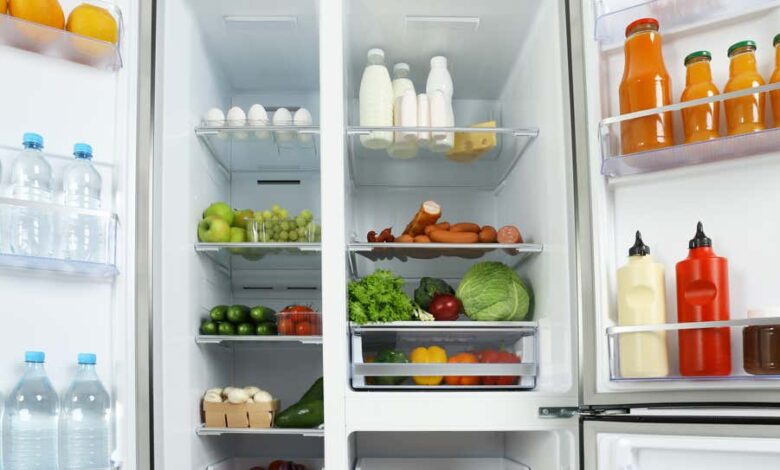
Shelves are at varying distances from the cooling mechanism in your fridge. Because of this, storing certain items in the bottom, top, or middle shelves preserves the food differently. Information experts at The Hub have provided a guide to storage designated by shelf.
Store snacks, leftovers, and other items that get consumed quickly (that could also go bad quickly) on the top shelf. The middle shelves are for dairy, cheeses, cooked meats, and leftovers. The midsection tends to be on the cooler end, so store your milk and eggs here, and they’ll keep longer.If your milk doesn’t fit in the middle section, you can easily rearrange the shelving to accommodate your needs.Items that contain bacteria need to be kept separate to avoid cross-contamination—store these items on the last shelf. The bottom shelf is perfect for raw meat and fish, and should be wrapped or stored in sealed containers. The drawers are for your fruits and vegetables. (Though they can be too moist for mushrooms.)
The door of your fridge is one of the warmest places, so it’s best to store the least perishable foods there like condiments, pickles, and jams.
Don’t store all your produce in the same drawer
We rarely think strategically about where we put our fresh produce in relation to each other—the fruits and veggies go in the crisper and that’s that. This is a common mistake, though.
The release of ethylene gas is what causes a fruit or vegetable to ripen. If certain fruits produce more than others, they can accelerate the ripening process, causing the food to go bad sooner. For this reason, you’ll want to store items like apples, cabbage, mushrooms, and mangoes away from each other. Insider offers a handy list of produce that should and shouldn’t be stored together.
Buy fridge containers to increase visibility and function
Everything in your fridge needs a designated space, and buying baskets and bins will help you categorize your items and give more space. If you love to keep cans of beer, seltzer, or soda, invest in a can holder. This container allows you to stack cans storing more while taking up less shelf space. Each type of item should have its own compartment.
If you are new to organizing and don’t know where to start, get yourself a starter kit. A container kit is a road map to establishing an organized food storage system in your household. These kits come with stackable containers for your deli meats and your eggs, baskets for your bread, smaller containers for your fruits inside your fridge drawers, and more.
Kits can be pretty pricey, anywhere from $163 to $243, but it’s worth it to save $103 worth of spoiled produce. If you’re on a tight budget, cheap containers from your bargain or dollar store can do the trick, it might just call for some creative stacking. In the end, you’ll get to enjoy your food rather than discovering rotten groceries hidden in the back behind the milk.