Act 1: Setting the Scene
I am here to make friends.
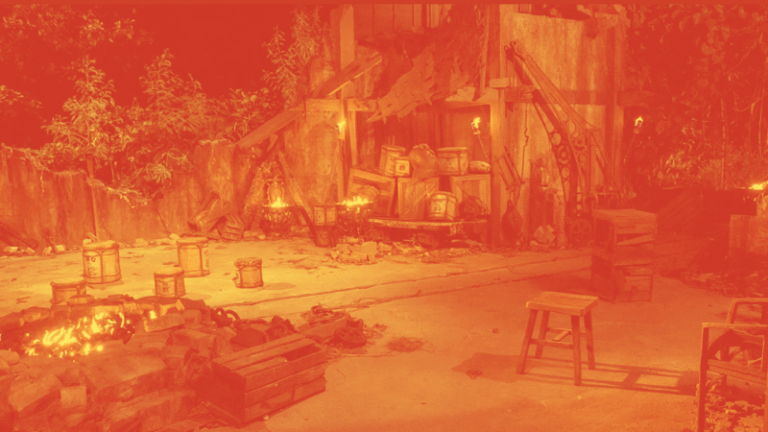
It’s Day One of Survivor: Tocantins and I’m standing on a hilltop overlooking the Brazilian Cerrado. It’s one of the most biodiverse regions on the planet, but staring across the brutal sand dunes where I’m going to live for the next month, that abundance seems largely expressed through spiders and snakes. Jeff Probst tells us that we have to select the weakest contestant from our tribe, based purely on first impressions. Outcast before the game even begins.
I look down the line. There’s the Alpha Jock and the Country Boy. I settle on the Kooky Older Lady, an easy consensus vote. But when we flip our parchments around, the Kooky Older Lady and the Hot Beach Model have both selected me, the Nerd.
The Kooky Older Lady gets the most votes—lucky her, it turns out we voted her into a helicopter ride to camp. The rest of us begin our four-hour trek in 120-degree heat. As we hike, I can feel the group’s judgment. I volunteer to carry three entire watermelons in a sack slung along my back, because I’m so desperate to please.
“I’m not here to make friends”—it’s arguably reality TV’s most famous line. First said on the first season of Survivor by runner-up Kelly Wiglesworth, the phrase has ping-ponged from America’s Next Top Model to Flavor of Love. But I’m convinced the reason the phrase has become reality contestants’ battle-cry is because it isn’t true. Casting selects for people-pleasers. They need contestants to be pliable. Over my coming weeks on Survivor, I’ll follow my handlers down treacherous jungle trails blindfolded. I’ll step into the blacked-out holds of boats with no clue where I’m going.
When I told people I was writing a novel about a reality show where people survived together in the wilderness to escape the anomie of contemporary life, they looked at me with profound pity.
The fact is, we’re all desperate to be liked. When contestants proclaim “I’m not here to make friends,” they’re being called out, or are about to do something cruel. By saying the words, invoking the mantra, they’re trying to prove their own hard-heartedness to themselves.
Act 2: Rising Action
The qualities that made me a viable contestant on reality TV almost eliminated me when I went to write a book about reality TV. I wanted to tell a story I’d never seen before, about the person I was standing on that hilltop: twenty-eight years old and working at a tech startup, certain there had to be more to life than conference calls and wireframes. About how I wanted to touch something real, strike out boldly into the wilderness… especially with a CBS medical chopper hovering nearby. How I signed a contract that said I might literally die, I might be eaten by animals, I might be edited to look dumb on television. How when I stepped out of that experience, I found myself transformed into a cartoon. How the producers aren’t manipulative gods, but brilliant storytellers, animated by their own needs and insecurities, who sometimes push too hard in their quest to alchemize real people into three-act structure.
But when I told people I was writing a novel about a reality show where people survived together in the wilderness to escape the anomie of contemporary life, they looked at me with profound pity.
Surely my imagination was not so impoverished? For years, people have been using amped-up high concept reality TV shows as psychotic stand-ins for social decay. Reality contestants in novels should be gladiators fighting to the death.
One mentor suggested that my fictional reality show should be themed to Colonists vs. Indigenous Peoples. Half the contestants would be the colonists; the others, the island’s indigenous inhabitants. It was a thrilling idea. Why write about reality television, when I could write about… America?
I spent a year reading about the colonial era and King Philip’s War, trying to shape my novel into my teacher’s vision. And honestly—I still think that could be an amazing book. But I realized that was not my book. Trying to wrestle with the legacy of colonial expansionism to please my teacher took me away from the grounded exploration of reality TV’s actual psychodramas.
I had to write the book that only I could write. Take that hard-hearted battle cry for my own, and insist to myself: I’m not here to make friends.
Act 3: Resolution
However, if I was going to write about reality shows as they exist, how could I avoid merely recapitulating what’s being done better on television? The drama and emotional beats on reality TV are sublime. As Sophie Newman just wrote in her excellent LitHub craft essay about the literary merits of Survivor, reality TV is “a hotbed of conflict and character.”
My early drafts tracked the scheming and backstabbing of my fictional show Escape! – both on camera and behind the scenes. I carefully plotted out the upstairs/downstairs drama, how the social politics of the production team refracts into the contestants’ strategy. But my MFA professor John Freeman showed me that I had to do more. Reality shows already showcase a dozen desperate people struggling against the elements and each other. But they’re broadcast in color-corrected HD. They’re set to soaring orchestral scores. “If you’re writing a novel, you need to do what only a novel can do,” John said. Bring to reality television that depth of interiority that only fiction can.
His advice unlocked the story for me. For example, I’d been struggling to write about the show’s challenges. On TV, the challenges are kinetic and exciting, flashy spectacles where people hurl their bodies off massive obstacle courses into the churning ocean below. But in my writing, they were dead on the page. Who cared about fictional contestants jumping off a ledge for a sandwich? Even if the challenges I wrote were scary, the reader knows it’s all part of a produced experience.
What’s interesting about challenges isn’t who sinks the winning skee-ball, it’s the ego and attitude you bring to a carnival game, the idea that your whole identity could be on the line based on how you perform on the balance beam.
I thought back to my second season, on Survivor: Cambodia, when a group of chest-thumping athletes got hot-headed and furious over who could win the ring toss. (Spoiler: It wasn’t me). I thought about the time I hurled myself off a giant pyramid and was more worried about twisting an ankle than winning the immunity necklace. What’s interesting about challenges isn’t who sinks the winning skee-ball, it’s the ego and attitude you bring to a carnival game, the idea that your whole identity could be on the line based on how you perform on the balance beam. It’s the reality of a frail, flawed human body trying to elevate itself into spectacle.
This became my structuring thesis. The contestants are trying to win a game, yes, but more than that: they’re chasing an idealized vision of themselves. How do you become the best possible Alpha Male, or Country Boy, or even the ideal Nerd? At every moment, contestants are hovering in a triple-awareness: assessing what they want to do; what the producers want them to do; and how it’s all going to play on television. I remember being absolutely tongue-tied trying to answer the most basic questions from Jeff Probst at Tribal Council, because I wasn’t merely responding to what he was asking. I was thinking—what are the other contestants going to think about what I say? What will the audience at home think? And most importantly, how will this reflect the person I’m trying to be?
That desperate pursuit of an ideal even impacts the confessionals. A reality confessional gives the illusion of authenticity, because contestants appear to be sharing their inmost thoughts, direct to the camera. But even confessionals are performance. Contestants are trying to please the producer asking the questions. And the producers know this, so they frame their questions to dangle that possibility—if only you answer correctly, you’ll become the person you dream of.
As I wrote, I realized that that the more deeply specific I was, the more the book seemed to reflect broader societal concerns. In a world of self-presentation and social media, we’re all editing ourselves into archetypes. We’re all chasing the best versions of ourselves, whom we catch an occasional glimpse of when we stare in a foggy mirror.
Epilogue
It took me years to realize that writing this book meant unlearning the instincts that made me good at reality television. As a contestant, I was a yes person. As a student, I learned how to be a no person. As a writer, I had to be a killer.
My novel goes to some dark places. I couldn’t write a jungle thriller, and not have things go horribly wrong. I couldn’t write a book about manipulation, and not have a producer push too far. I couldn’t write about the desperate pursuit of identity, and not have it unravel. If I wanted to excavate the dark heart of reality television, the book couldn’t only be skin-deep.
But the hardest part of the novel wasn’t scripting the scheming, backstabbing, or duplicitous behavior. It was allowing my characters to crave connection, to believe in one another, to risk being embarrassed by sincerity.
It’s only in writing this essay that I’ve realized my own psychodrama, that by writing this book I’ve wrestled my way from being a character into being a storyteller.
And I am here to make friends.
_______________________________________
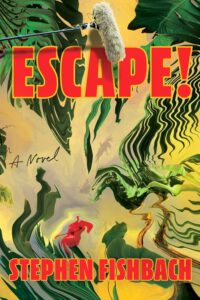
Escape! by Stephen Fishbach is available via Dutton.

