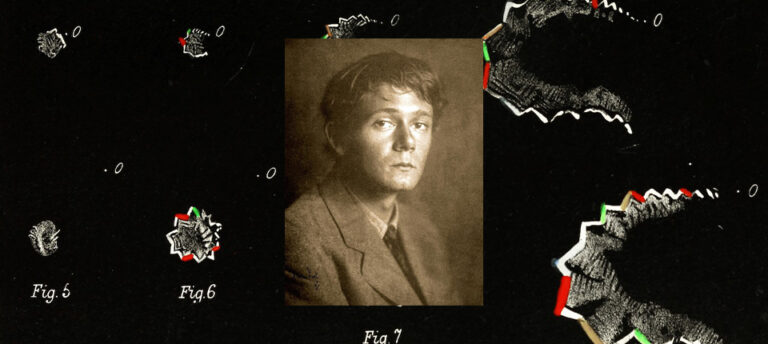
 TODAY: In 1893, Clark Ashton Smith is born.
- “There were other loves in Alexander’s life, but none who meant so much to him as Hephaestion.” On Alexander the Great and Hellenistic homophobia. | Lit Hub History
- Megan Milks follows their fascination with cows (and milk) to an animal sanctuary: “I’m just dipping my toes into this world, I remind myself. The prospect of this kind of research is daunting, as my life is so removed from farm culture.” | Lit Hub Memoir
- Jane Ciabattari talks to Madeline Cash, the author of Lost Lambs, about her “wondrously comic” first novel. | Lit Hub In Conversation
- The 21 new books out today include titles by Karl Ove Knausgaard, Niall Williams, Daniyal Mueenuddin, and more. | Lit Hub Reading Lists
- Jung Chang remembers the early days of Mao’s Cultural Revolution in her hometown of Chengdu. | Lit Hub History
- Stefan Merrill Block, Nina McConigley, Ben Markovits and more authors answer our burning questions about literary life. | Lit Hub Craft
- Read an epistolary exchange between Miroslav Volf and Christian Wiman about God, poetry, Joyce, Pound, and more. | Lit Hub Criticism
- “There is no reason to be afraid of death – when we exist, death is not; and when death exists, we are not.” Read from Karl Ove Knausgaard’s novel The School of Night, translated by Martin Aitken. | Lit Hub Fiction
- “The whole industry is staked on a shaky metaphor.” Alex Reisner on AI’s memorization problem. | The Atlantic
- Tyler Watanamuk considers the art (and commerce) of the book stack. | Dirt
- “There’s this Chekhov quote that I’m kind of living by lately. He says a work of art doesn’t have to solve a problem — it just has to formulate it correctly.” David Marchese interviews George Saunders. | The New York Times
- Grant Morrison discusses thoughts, bacteria, The Invisibles, and The Filth. | The Comics Journal
- Vivian Gornick traces John Updike’s life in letters. | The Nation
- How Vietnamese philosopher Trần Đức Thảo conceptualized the divide between colonized and colonizers. | Aeon