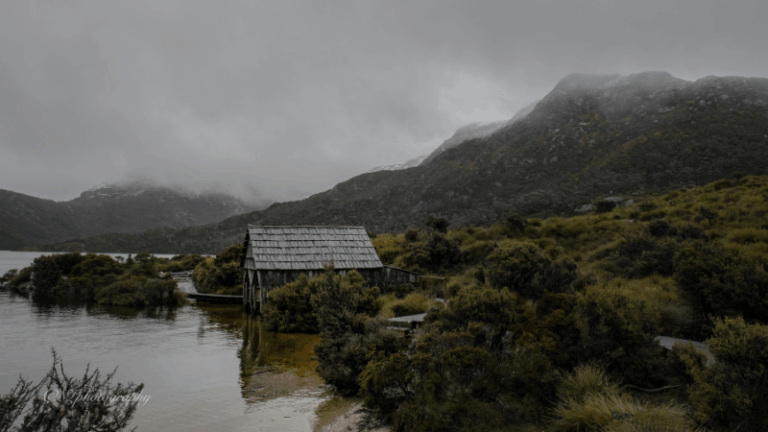
Tasmania is an archipelago of some 334 islands and I live on one of them. It’s a place of wild weather with quixotic moods and vivid seasons. Below the 40th parallel in the Southern Ocean, there are sixty-knot winds and tempestuous seas, rainforests, mountains, white sand beaches and an ever-changing sky.
My new novel—A Great Act of Love —begins far from here. It is the early 1800s in London. The streets are begrimed by factory smoke, fecund with horse dung and lit by lanterns. It was a city of a million people and it was estimated 100,000 people were criminals. It was a time of displacement and dispossession fomented by the industrial revolution. Some eighty-thousand men, women and children would be sentenced to transportation, taking them from Ireland, England, Wales and Scotland to a distant region of the British Empire that would come to be known as Tasmania. There they were convict labor working farms, building roads, bridges and a new society. Some of them were my ancestors.
I was five years old when my mother mentioned that our family had once lived in Scotland. I asked her where it was, expecting to be able to drive there, but she said, “It’s on the other side of the world.” I remember tracing my fingers over the globe in the lounge room, until they rested upon Britain. I was awestruck at how big the world was. I thought, “When I grow up, I will go traveling.” And I did.
I surrender to the inner voice, the leaf-strewn trail of character, plot, dialogue and divination, a path that has no map, no regular source of light, no visible end.
Tasmania has given me an adventurous spirit and a writer’s heart. It has awakened me and tempered me. It has given me hours to dream. I have always been keen to understand how other people see the world, where history has taken us, the myths we tell, the deities we worship, what gives power to human expression and repression. Remoteness has made me curious about many things.
Tasmanians are island people, sea people. It feels like I spent half my childhood with a fishing line in my hand, out on the incoming tide with my grandfather, watching light and water. That is how my first novel—White Heart—began. Writing a love letter to my brother and grandfather who drowned when I was twelve, out fishing, caught in a squall. Tasmania has tattooed me with loss and grief and wonder.
At nineteen I went traveling through Asia and on to Europe. I took a job as a companion to a British Lord and Lady outside London, and found myself in a version of George Bernard Shaw’s Pygmalion. My Australian vowels were not corrected, but I was introduced to fine wine, opera and the royal family. I drank a glass of champagne from 1946 and it was exquisite, and would linger in my imagination. It was a rare glimpse into the conversation and culture of hereditary privilege.
My second novel—The Butterfly Man—is based on the disappearance of Lord Lucan in 1974 after the murder of the family nanny. I wrote that novel in a studio high on a Tasmanian mountain, but it was imbued by the time I spent in Surrey, England.
Always there has been this pull; to go out into the world and explore, and this urge to stay home, swim in the sea, grow a garden, live quietly. I travel and then, back at my desk, it all sifts and settles. I surrender to the inner voice, the leaf-strewn trail of character, plot, dialogue and divination, a path that has no map, no regular source of light, no visible end. Stories emerge.
I love Tasmania. I love it with a kind of fierce, unreasonable passion. If you tried to take me from it, I would fight you.
My seventh novel—The Museum of Modern Love—is set in New York. It was inspired by a photograph of the performance artist Marina Abramovic. Years of reading ensued—books on art history, women in art, and Marina’s life and work. Over several years, I spent weeks in New York researching. The characters and the plot came from that city, but the craft of the novel was all honed in Tasmania.
A Great Act of Love was inspired by a vineyard that produced an exceptional sparkling wine in 1820’s Tasmania. One of my ancestors, a young woman called Caroline, my grandmother’s great grandmother, settled very close to that vineyard. She came to create a new life, and to escape a dark past. Weaving historical fiction and family history has brought me closer to my island home.
I love Tasmania. I love it with a kind of fierce, unreasonable passion. If you tried to take me from it, I would fight you. Loving a place is not like loving a person. The land and the sky and the wind are generous, accepting all my feelings and, in return, they continue to be just as they are. The sky does not flutter at my heartfelt admiration. The trees cannot hug me back. But every day I breathe deeply of this wild world, happiness swells inside me. Ideas take shape. Words flow.
My creativity delights in currawong calls, and the ululation of magpies, warblers and kookaburras. In watching a wombat swim in a pond. A forest raven pecking the soil for grubs. Black cockatoos sweeping across the sky. A sea eagle spiraling. A fish on the line. And it delights in weather; afternoon sea breezes, gales and westerlies, lightning, hail and thunder. Weather that moves from summer’s seduction to autumn’s flamboyance, to the steady blue of a winter sky with wind so chill it makes the ashes shiver in the fireplace, until the return of vain, temperamental and euphoric spring.
I immerse myself in the places I know, and from there I walk into the places I do not. And I trust that it will be enough.
__________________________________
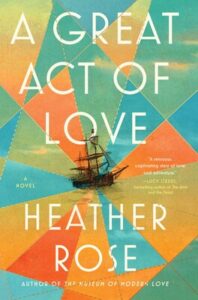
A Great Act of Love by Heather Rose is available from Summit Books.