When Donald Judd moved to Marfa, a small desert town on the edge of Texas, he turned it into a living experiment. Artists like Robert Irwin, John Chamberlain, Ilya and Emilia Kabakov and others followed, each exploring how space could think for itself, how perception might become its own work of art. This autumn, for the first time, classical music entered that conversation.
Two Yamaha concert grand pianos traveled a thousand miles from Los Angeles. For each of the four locations, the pianos were disassembled, transported, reassembled and tuned to the precise conditions. For three days the town itself became a soundboard, its beating heart exposed in sound.
In collaboration with Ballroom Marfa, celebrated pianists Pavel Kolesnikov and Samson Tsoy embarked on an ambitious adventure. They created a site-specific project that treated sound as material, music as architecture, and listening as a conscious act of presence. They tell the story in their own words, writing about the elusive soul of Marfa and their experiments in sound in collaboration with Rachel Cobb whose images of the project trigger memories and afterthoughts.
*
We arrived at night, in early January. Half-awake after an endless journey disrupted by snowstorms and fire, the only thing we could see as we drove in was a string of festoon lights suspended in the dark.
Early the next morning, we wandered through luminous, empty streets. If it was a game, we were given no clues. The whole town presented itself as a pause, an undisclosed possibility. Concert pianists travel the world incessantly, but in all our years of touring, we had never felt so completely displaced. We kept repeating to each other, like a mantra, “Where the hell are we.” It wasn’t even a question. We still had no idea what magical madness we were stepping into.
We had come to a far corner of Texas, all the way from Europe, on a special mission. Invited by Ballroom Marfa, we were there to explore, to see if we could discover something—some trigger or synergy—that could become the foundation for a special project. We were excited beyond words to be in that mysterious little town.
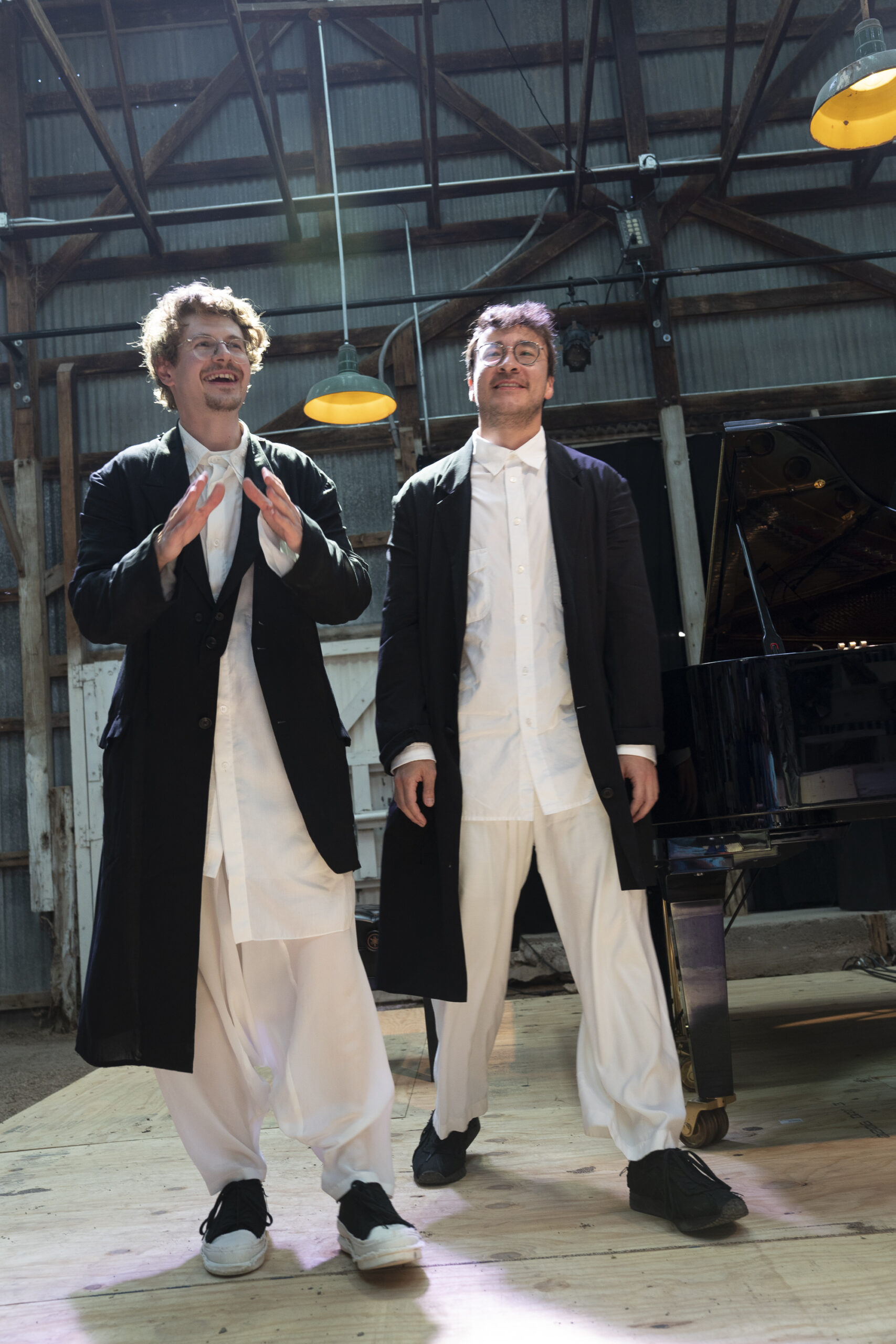
In recent years we’ve been living double lives. Much of our work belonged to the traditional classical music circuit, recital performances in esteemed concert halls, often acoustically perfect; touring as soloists with orchestras; having fun at summer festivals. But there were things that couldn’t be done in those flawless circumstances. They often couldn’t accommodate spontaneity, vision, or daring, things we could never sacrifice. We kept searching for our own ways.
Perhaps ten years ago, we wouldn’t have dreamed of doing things like this—what some might see as an increasingly experimental trajectory in our work surprises even us.
At our own intercity Ragged Festival we’d been experimenting with subtle interactions between music and space; other projects, like a sonic exploration of Richard Serra’s Matter of Time at the Guggenheim Bilbao, or an experiment turning a concert stage into a Joseph Cornell box, leaned towards complete site-specificity.
But why are we interested in doing things like this at all? Why does one need these eccentric experiments? What’s the point of dragging two concert grand pianos thousands of miles just to play some Bach or Mozart in the desert? Isn’t a proper concert hall the best possible place to experience the power of music?
Perhaps ten years ago, we wouldn’t have dreamed of doing things like this—what some might see as an increasingly experimental trajectory in our work surprises even us. But now it seems the only logical and necessary development, the only real possibility in the paradoxical state of classical music as an art form. While its forms have been perfected to the point of paralysis, the very meaning of its rituals has become forgotten. The concert hall and the stage, the hierarchy between composer, performer, and audience—these are just a few of the golden conventions that are rarely questioned or challenged. They’ve hardened into a protective shell, often impenetrable, which in recent years has begun to isolate music from the living world.
We see our work as performing artists primarily as an act of resistance to that isolation. We don’t aim to “modernize” classical music or decorate it with contemporary gestures—it doesn’t need that. What it asks for is a return to the field of art: fertile, interconnected, where perception itself becomes the medium. The beauty of live performance lies in its boundless flexibility, in its ability to evolve, to find the most direct way to reach perception—to enrich, and sometimes completely transform, consciousness.
This is why we were now walking the streets of Marfa. This is why we believed it was important to come to that otherworldly place and unearth its riddles. A place that, on that day, offered us no ready answers. It turned out to be more complex than we could have imagined. It wasn’t the land of “this” or “that,” not the land of Donald Judd, or even of Robert Irwin. Their extraordinary works there were like precious plants, nurtured and shaped by the terrain.
Yet the land itself wasn’t waiting to accept just any seed. We drove from one site to another, looking for the first piece of the puzzle. Something was stirring beneath the surface, waiting to be summoned, but by the end of that long day we were bewildered and lost. And then, a man we met at a bar over dinner said, “Have you been to Stardust?”
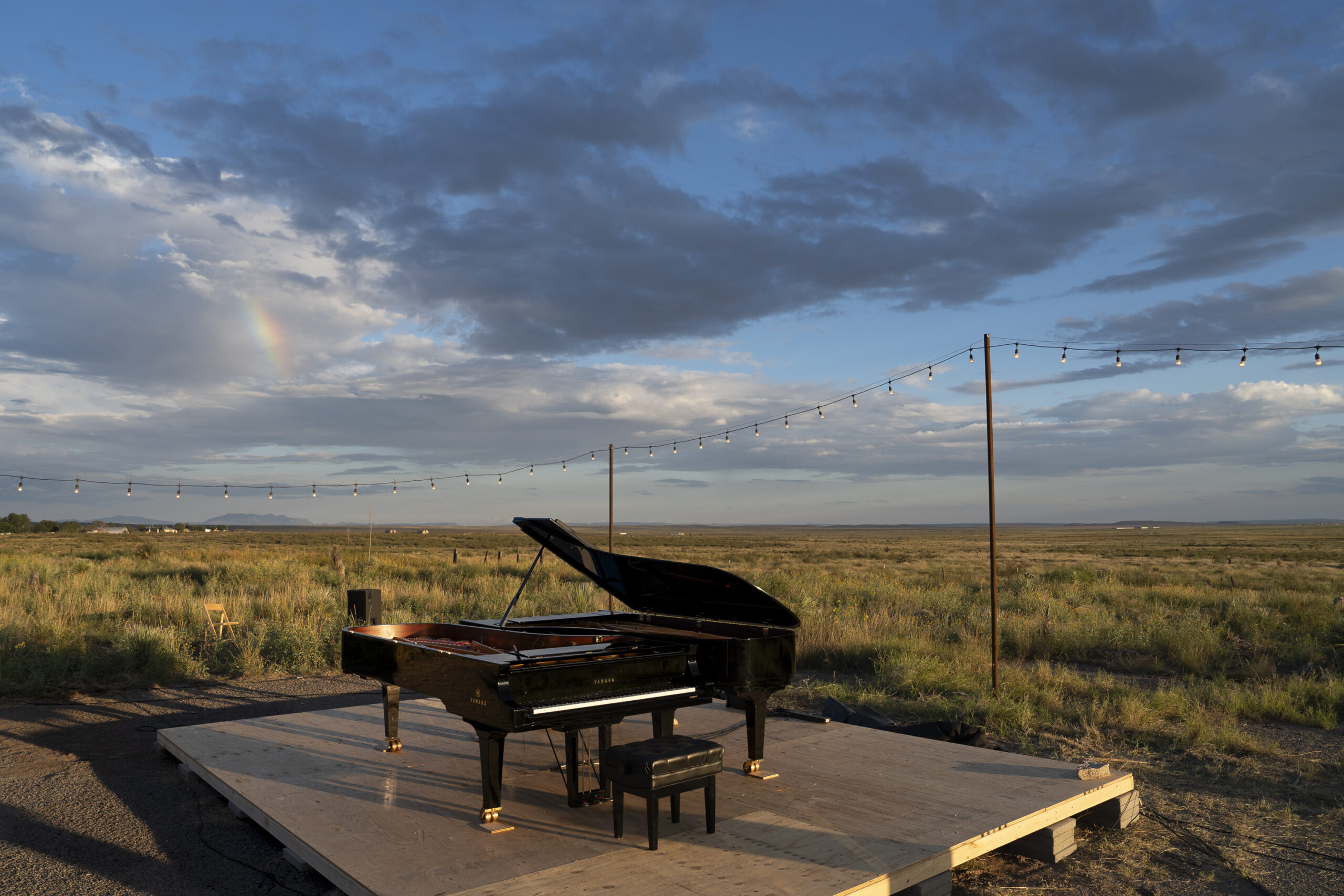
Stardust
Well—how to describe it. Stardust was, mostly, a name. A ghost, a trace. A breath of wind over patches of asphalt and grass, and a neon sign.
The poetry of that site was simple yet overwhelming. It had once been a roadside motel with a generous view over the grasslands. Somewhat unusually, the building was long gone, demolished, yet nothing had ever replaced it. Stardust remained anonymous, stripped of all its physical attributes. For us, this paradox became the first clue, the keyhole to Marfa’s invisible world. All we needed to add was a string of lights tracing the perimeter of its vanished walls—like the ones we saw on the night we arrived—and a few notes of a waltz to wake the dormant ghost.
This idea of awakening, of making something transpire or re-activate, eventually became what unified our project: a constellation of five performances in Marfa over one September weekend. Rather than being imported, the idea was offered to us by the place itself. In our approach to site-specific work, a “found” idea is invaluable, both a resource and a kind of permission, a blessing from the site. Without it, an artist is no more than a noisy intruder.
Stardust became the threshold. Its gentle spirit allowed us to be gentle. There, we could casually remove the wall separating us from the audience. From that moment, we were all inside the same space, part of the same thing—not a series of concerts, but a vast sound installation made of harmonies, human attention, Texan wind, and desert dust.
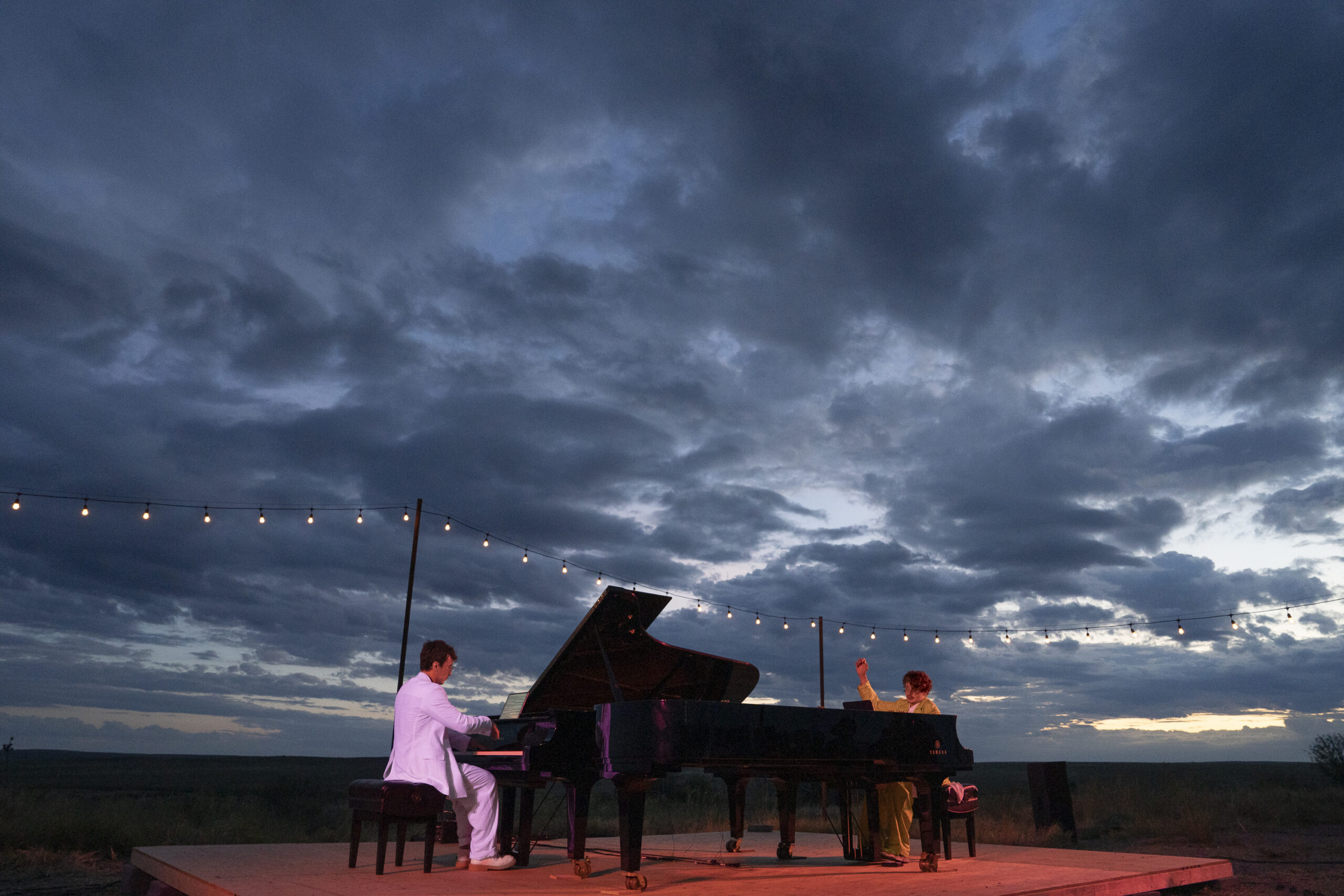
In September, the night before the show, we went to set up the stage lights. Our Stardust opening was woven together as a surrealist collage, a melancholic waltz echoing through a labyrinth of mirrors and secret passages, enticing and elusive. We were preparing for a flickering fairytale, yet at that moment there was only a simple wooden platform in a dark field. And as soon as Rob turned on the electricity, something special happened. Insects and moths came to dance in the beams of light. They moved in complete silence, thousands arriving every minute. What a strange and glorious spectacle it was—a part no one but us ever saw.

Invisible concert
The locals speak of the “Marfa Lights,” glowing green spheres said to appear sometimes to those who seek them at night. We chose to perform at the golf course during the day, not the luxurious, relaxing experience it might have been in the morning or evening, but a rare occurrence, a brief encounter with the unknown, an emanation of the land under the midday sun.
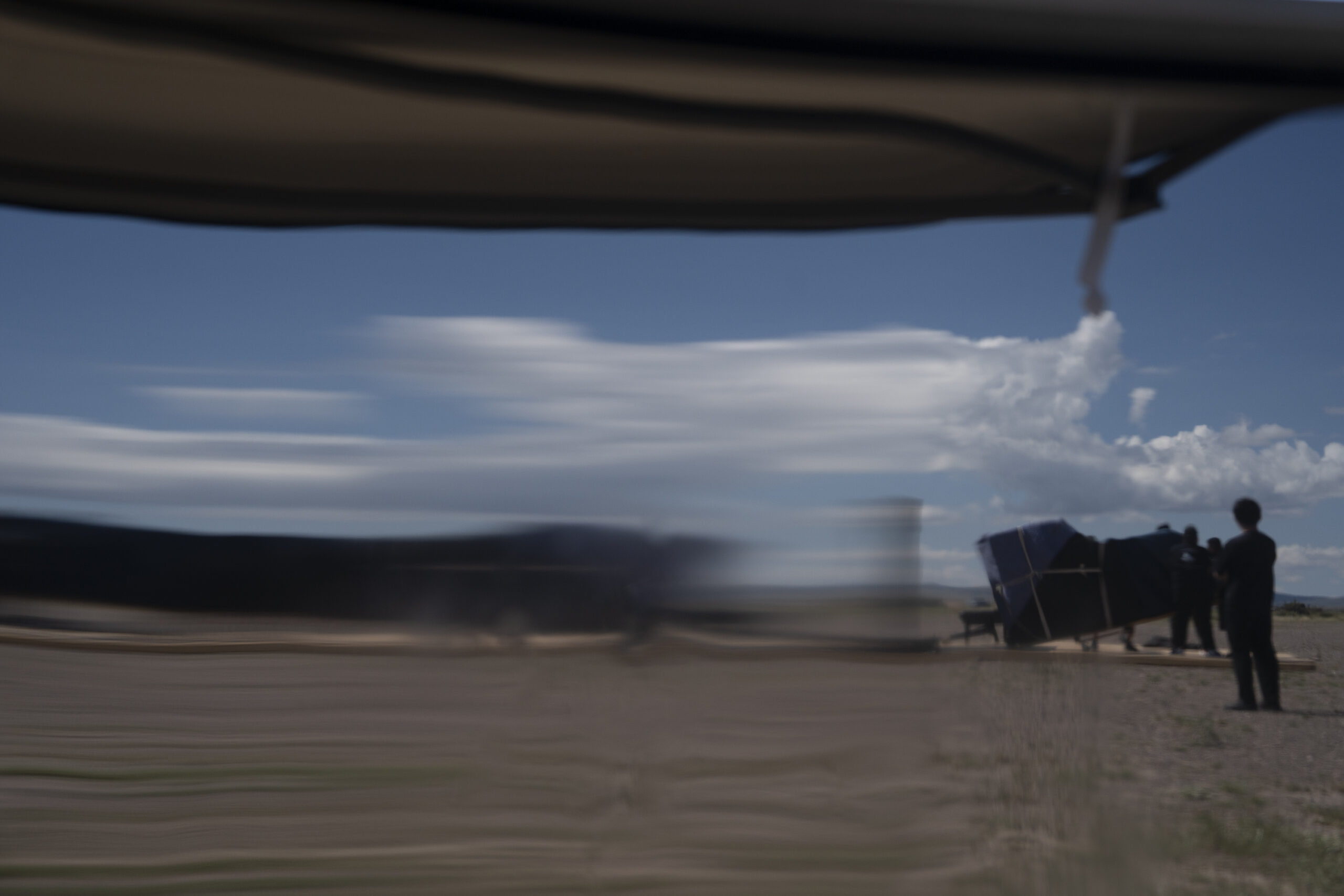
To be fair, the whole town is a mirage. Try to bring it into focus and everything disappears. During our January visit, under sharp sun and cold air, we tried to learn how to see the evasive terrain. We figured out the trick: to look without looking, eyes open wide yet blindly, letting the shining light bypass vision. Then, briefly, the true image appears, projected clearly in the dark somewhere behind the back of your mind.
The visual artists who come to work in Marfa seem to understand this instinctively. The work made there often shares this quality with the landscape—it remains, strictly speaking, beyond the reach of pure eyesight. For a musician, an artist working with the invisible, Marfa is paradise.
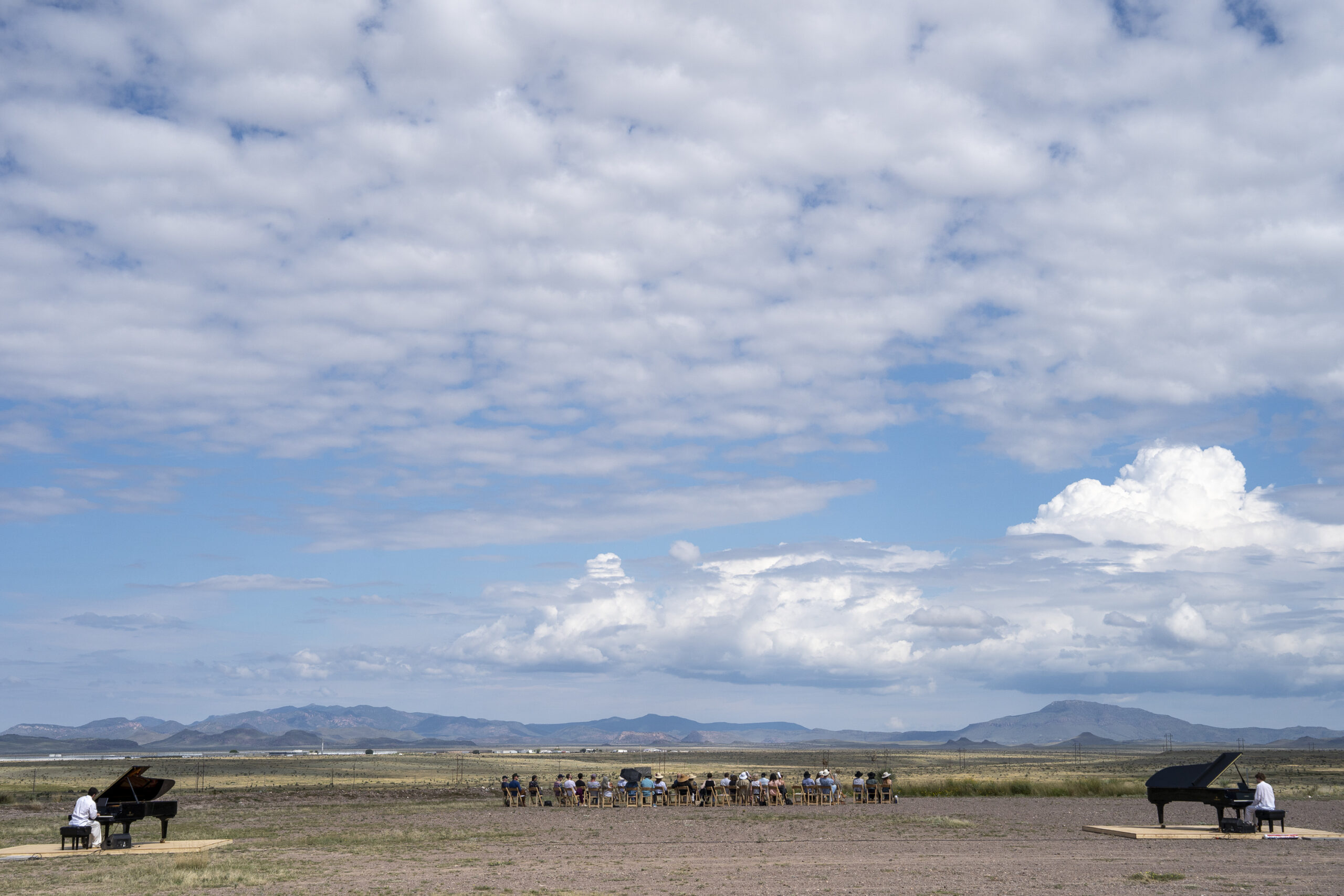
One can think of sound floating in the air as a kind of flying angel. Sound is a wave, but as it rolls through the landscape a curious phenomenon occurs: there is a moment when it detaches from its source and becomes a being. Like a rare bird released into the wild, it flies away, within seconds becoming part of the environment.
The tricky part of a performance like this is speed, the speed of sound itself. The time it takes for it to travel from one piano to another creates a delay, making it nearly impossible to play together. But also, the speed of the operation: to find a solution, we had to work fast, as the pianos heated up immediately in direct sunlight. All in all, the invisible—or “inverted”—concert, as Ballroom Marfa co-founder Virginia Lebermann called it, was the craziest thing we’d ever done. It was an act of complete trust in the terroir that had gifted us the idea.
In our work for Marfa, we were deliberate about aiming outside the target. We looked for paradox, contradictions that would situate the work outside any category: not a performance, not an installation, not something easily labeled or described. We were searching for an artistic expression that would feel organic and true yet evade scrutiny. And this, perhaps, is one of the things that makes site-specific work so special. If the place accepts and embraces the work, the notorious genius loci will shield it from unnecessary inspection, allowing it to be experienced directly and profoundly—the way we experience the shape of a tree, the smell of a local flower, or the color of a cloud.
Bullroom
Not everything Marfa gave us was gentle or delicate. There was another side to connect with, a rough, primeval, earthly energy. Perhaps one of Marfa’s secret powers lies in its constant oscillation between the robust and the ethereal, and that’s what gives depth to the work created there. On our January trip, we must have passed the enormous pile of corrugated panels a dozen times before finally stopping to look. A pile of grey steel, yes, but stepping inside, we couldn’t help gasping. Part theatre, part cathedral, it was a former cattle auction house. On the sand floor lay the skeleton of a cat. No one had been there for years.
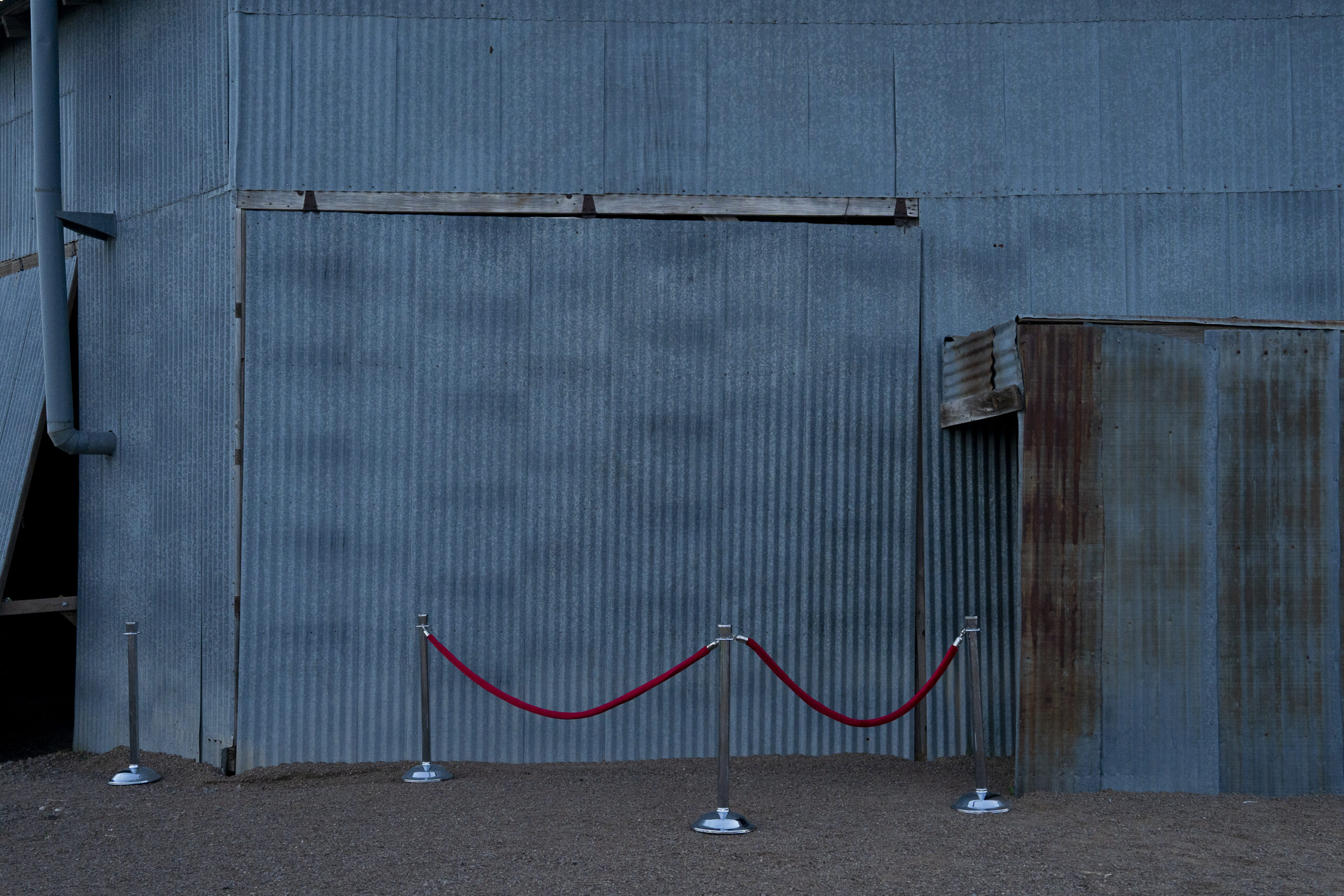
It’s funny to think that in this whole adventure—which in many ways was so ephemeral—there was also room for the discovery of the Bullroom. And somehow, it truly was a discovery: even though the bull barn had always stood in plain sight and was well known to locals, it was one of those spaces that fall asleep and turn invisible, unnoticed and unconsidered. And suddenly, it was seen and understood.
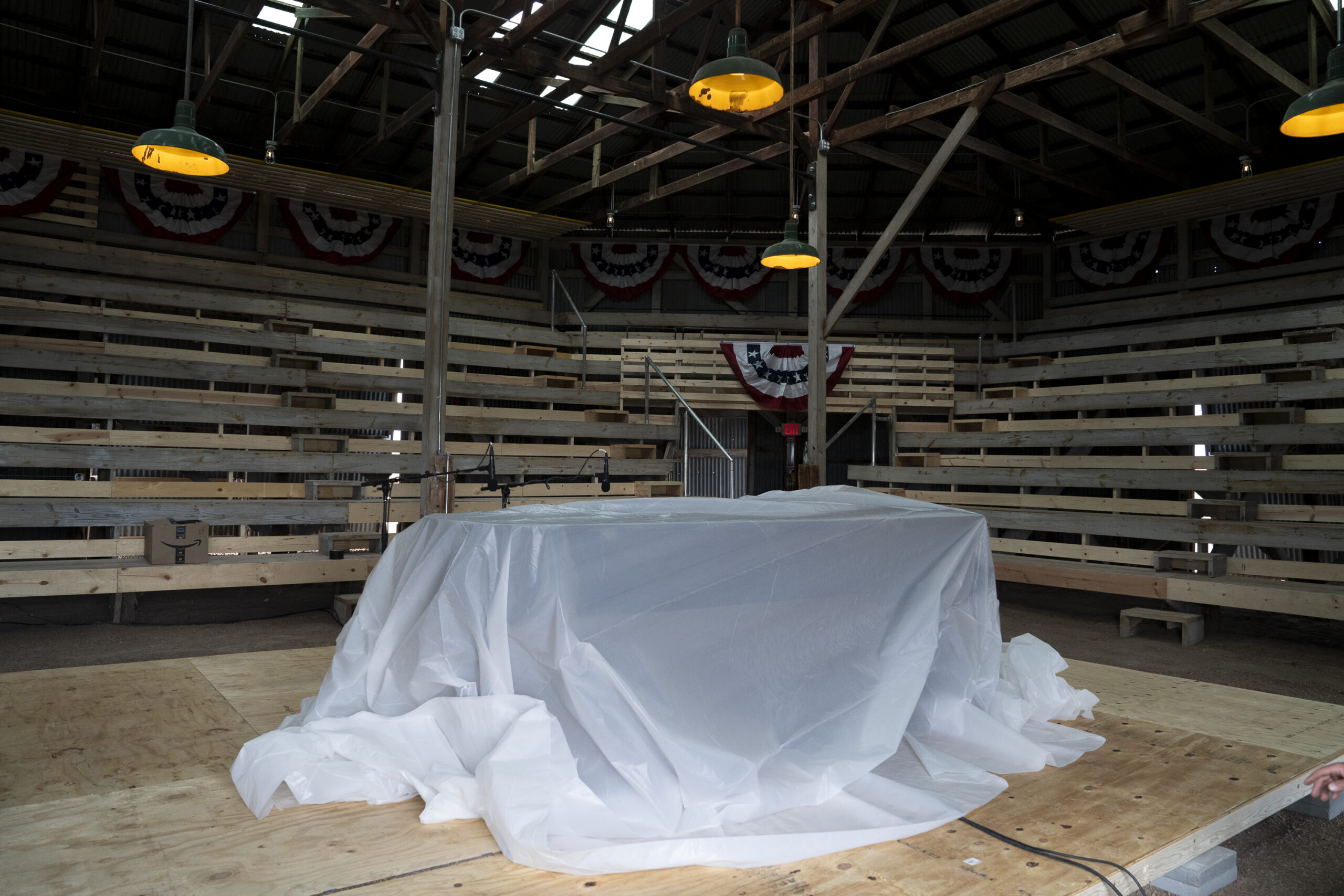
The Ballroom decided to lease the space, making it their second venue in Marfa. For us, it meant we could connect to a different kind of Marfa energy, one that called for boldness, large scale, and strong colors.
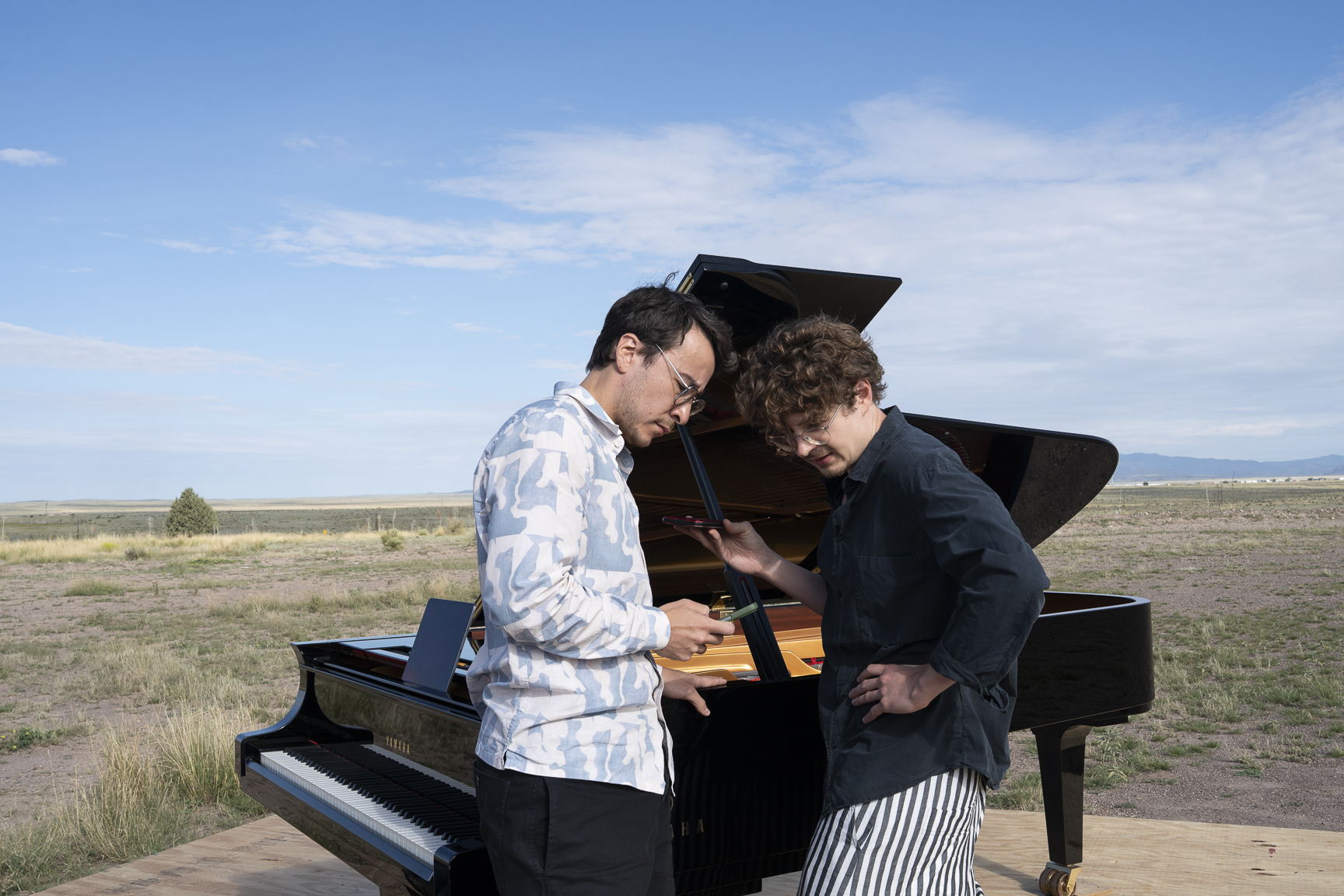
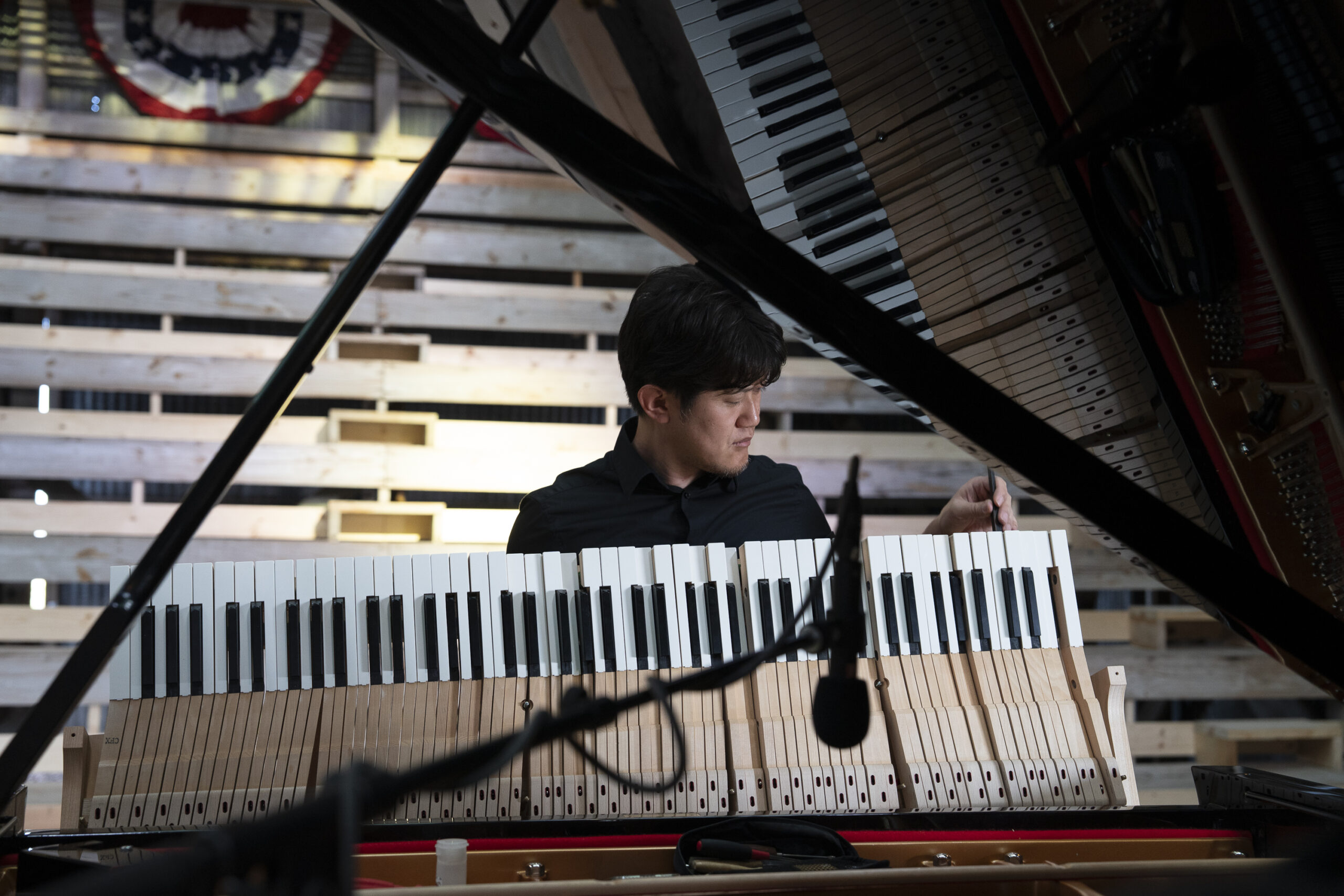
It’s amazing how different it felt for us, almost as if each time we became different artists. Creating the Stardust performance took months of fine embroidery in sound, endlessly refining transitions, searching for a phrase or color that would merge seamlessly with the gentle curve of the slope or the imagined shades of the sky (with help from Yamaha’s Shinya Maeda, pictured below, who tuned our concert grand pianos before each performance, and sometimes during intermission, after a temperature change). The work at the golf course, the “invisible concert,” required another kind of approach: like dreaming of a single, impossible movement, or feeding a bird you’ll one day release with a simple, unrehearsed gesture of the hand.
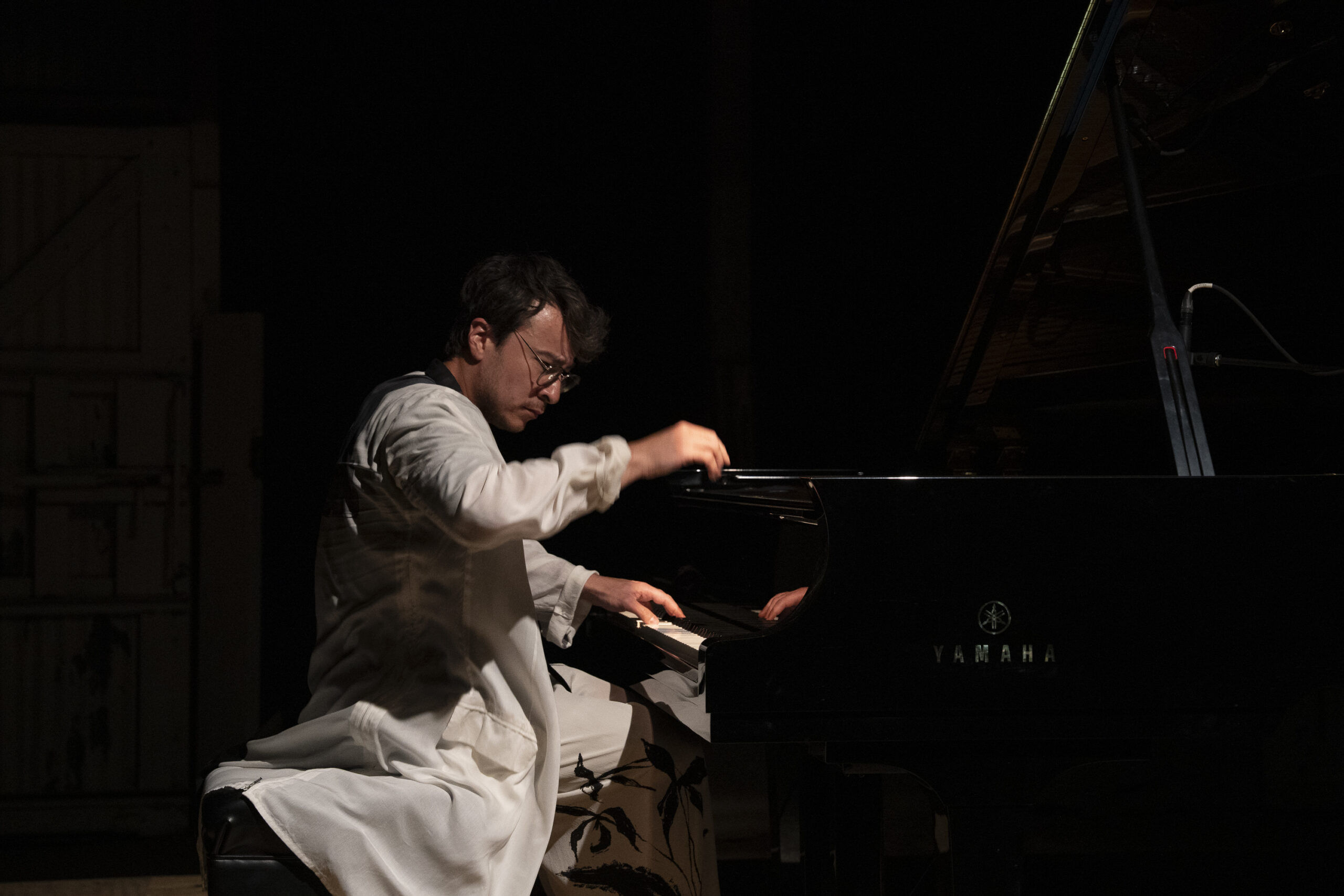
Building the performances at the Bullroom was exactly that, building. It felt methodical, solid, justified. We were working with pieces by Beethoven, Bach, Messiaen, and Ustvolskaya, the great Russian avant-garde composer; for us at that moment, they were like blocks of wood, steel rods, and slabs of marble.
Stone Circle
There was one last site, and one last story. The Stone Circle—Haroon Mirza’s installation—was a completely different situation from the others. It took us some time to decide whether it felt right to perform inside another artwork, especially since the installation itself was a sound piece. The decision came when we consulted the moon calendar. The Stone Circle is tied to the lunar cycle and goes through a series of “activations” triggered by the full moon. Since our performances fell on the new moon, we felt our work there could become a different kind of activation.
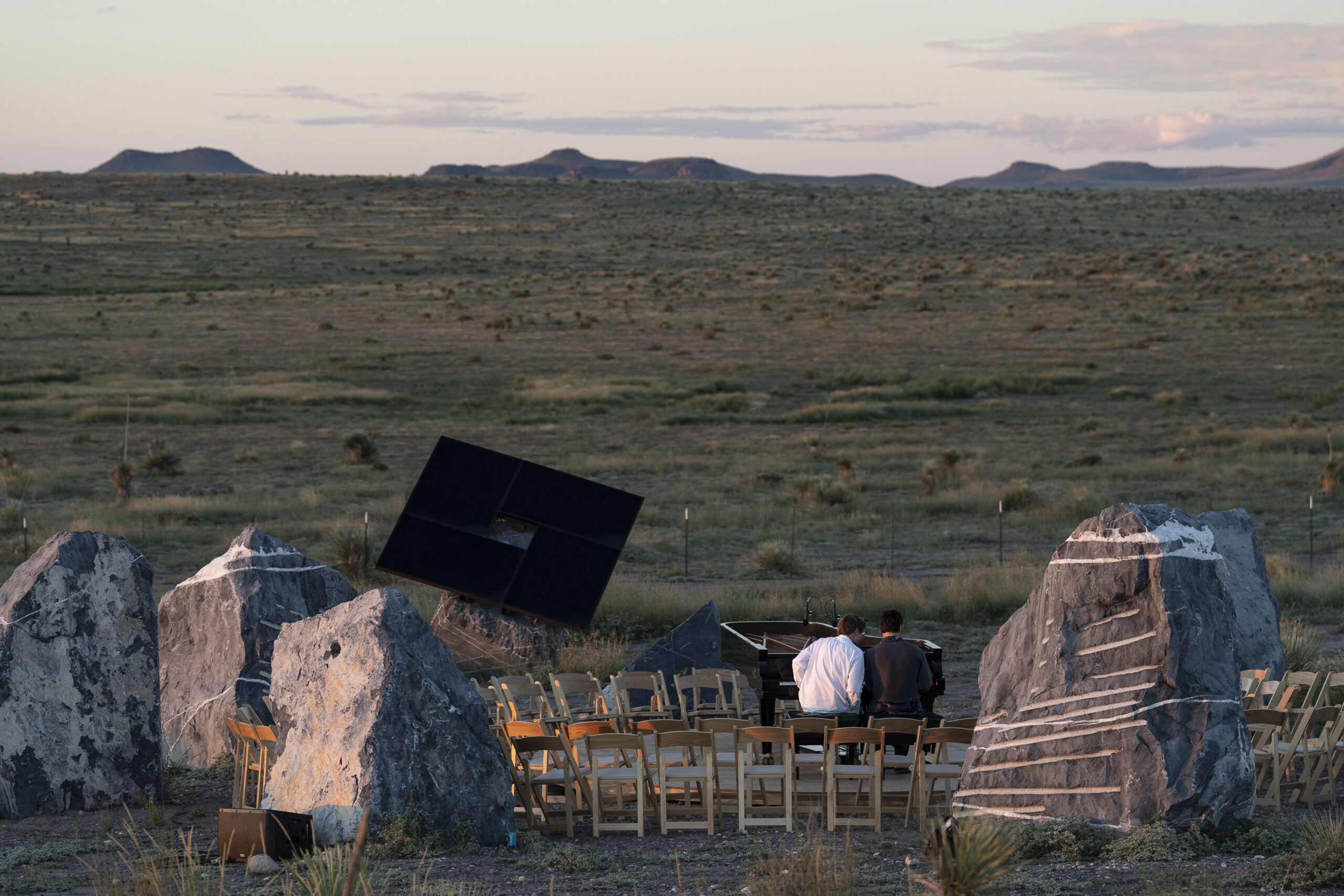
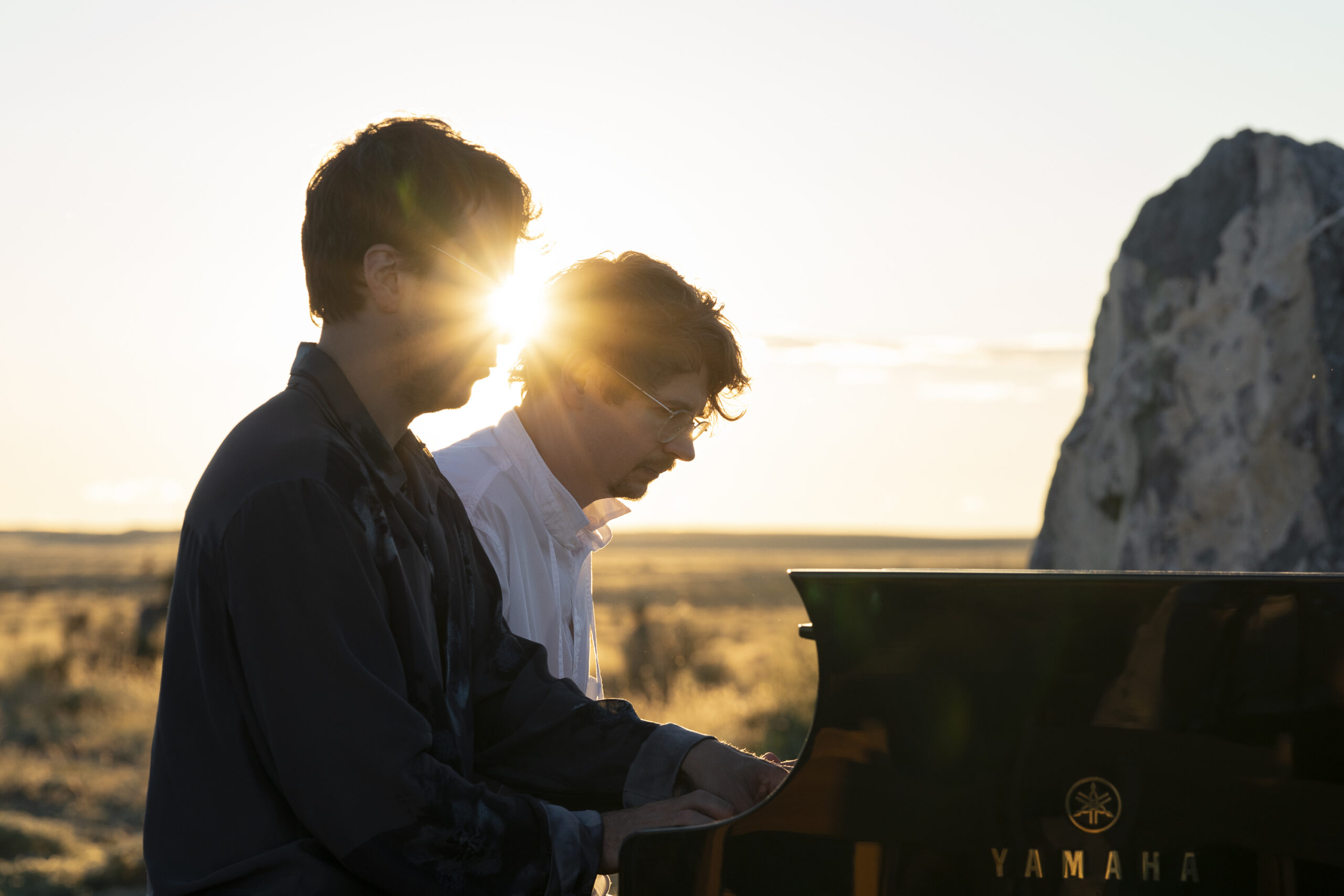
The idea was simple: we would play Stravinsky’s Rite of Spring at night, inside the circle, on a round platform surrounded by the audience. Artwork within artwork, both rooted in ancient rituals, their theatricality would cancel out, breaking free and becoming real.
We were going to play this astonishing, meteoric piece in Stravinsky’s original version for piano four hands, a monstrous, incredibly demanding task. The complexity and precision of the Rite’s ritual rhythms push players to their absolute limits of concentration and endurance. As we walked in the darkness toward the Stone Circle, brightly lit by floodlights and surrounded by hundreds of people, we decided we wouldn’t take a bow. After all, what we were about to do wasn’t a performance—it was an enactment of a ritual.
We will never know how or why it happened. About twenty minutes into the piece, Stravinsky marks the arrival of night with a single word in the score. Seconds later, all the floodlights went out. We were in complete darkness under a starry, moonless sky, drawing those black harmonies and monstrous rhythms from the black beast of the piano, merged with the night.
As performing artists, you sometimes have to make quick, hard decisions on stage—but nothing in our months of preparation could have prepared us for this. Playing the Rite of Spring in darkness is absolutely impossible, but we had no choice. We knew we couldn’t stop. We whispered a few words to each other and kept playing. The situation was reversed—we were no longer the artists creating the artwork; the artwork had broken free and possessed us. We had called for the ritual, and now we had to complete it. Suddenly, there was no protective wall, no safe word. We were the ones dancing the sacrificial dance, in front of hundreds of people, in the dark.
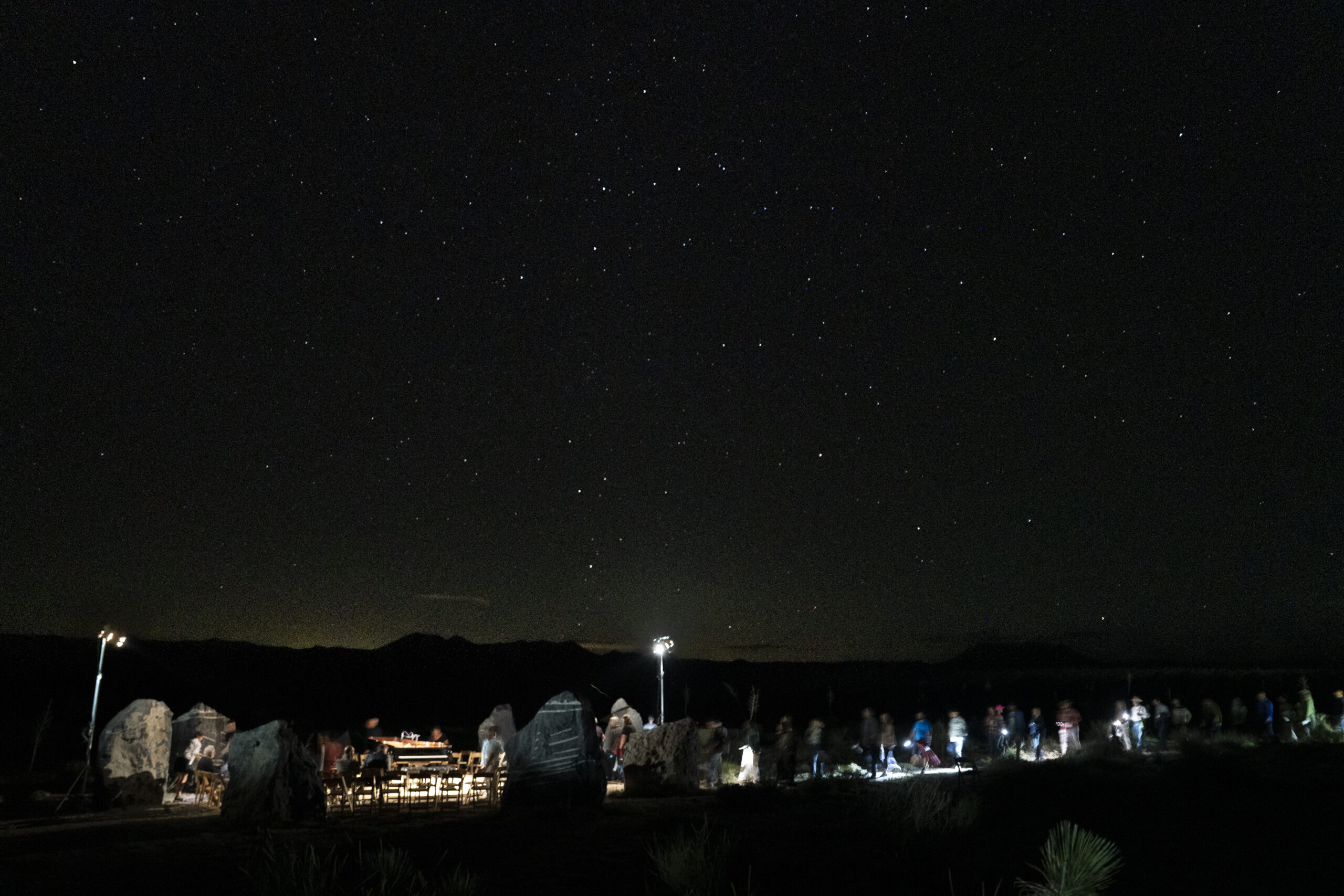
Later that night, drinking ice-cold vodka, we talked about it all, about the fiery meteorites people had seen in the sky, about the diagonal rays of green light we noticed at sunset, about how not a single person realized the blackout was an accident. We spoke about those violent rhythms, and how it must have been the biggest crowd Marfa had ever seen, standing among the stones and looking at the sky in awe. About Marfa taking down our lights. And how, for a good ten minutes, we all entered a sublime and fearful state where life and art collided and eclipsed one another, leaving us in the dark—purified, bound together by a cosmic thread.
____________________________________
Pavel Kolesnikov and Samson Tsoy are concert pianists known for their subtle reimagining of classical music. Their programs draw on repertoire spanning centuries, unfolding as dialogues that open new dimensions of perception. Treating music as material, they create performances that transform listening into a spatial and sensory experience. Together and independently, they have developed projects for the Fondation Louis Vuitton in dialogue with David Hockney, for Richard Serra’s sculptures at the Guggenheim Bilbao and Gagosian Gallery, and programmed music for Yohji Yamamoto’s fashion show. Their Carnegie Hall recital was named among The New York Times “Best Performances of 2024.” Find them at @samson_tsoy and @kolesnikovpianist.
Rachel Cobb is a photographer based in New York City whose editorial work has been published widely in around the world. Her 20-year project on France’s Mistral wind culminated in an award-winning book Mistral: The Legendary Wind of Provence [Damiani] and a series of exhibitions across the U.S. and France. In addition, Cobb and her Mistral work were featured in the documentary series Grands Vents airing now on Arte. You can find her on the web at @rachelcobbphoto.

